
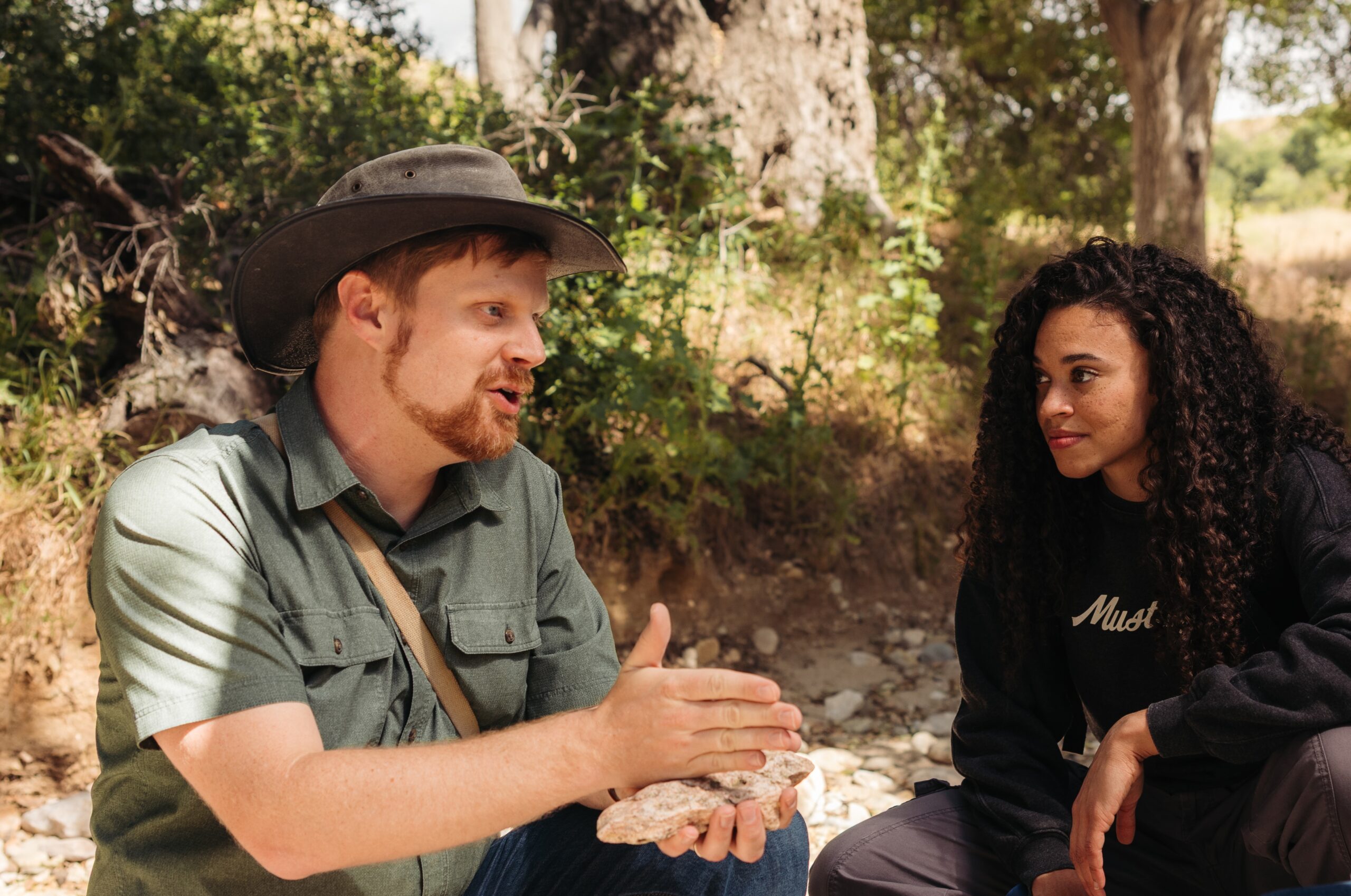
Dr. Matthew McLain was recently involved in a scientific study examining thousands of fossils excavated from a Wyoming bonebed. The study aimed to refine vague criteria that often incorrectly interpret scratches, holes, and other features on dinosaur bones as bite marks, offering a major contribution to how fossils worldwide are analyzed.
McLain, dean of the School of Science, Mathematics, Technology, and Health at The Master’s University, co-authored the study along with researchers from other universities.
The study, titled “Identification of Tooth Traces From a Cretaceous (Maastrichtian) Edmontosaurus annectens Bonebed in the Lance Formation, Wyoming, U.S.A.,” found evidence that marks or lesions on dinosaur bones have many causes aside from bite marks. Of the 3,013 bones examined, only 13 had clear indications of tooth marks.
The study suggested a narrower set of criteria for identifying bone marks on fossils as bite marks, pointing out several other causes such as erosion, genetic conditions, infection, natural features of the bone, or even invertebrate activity. Historically, these factors have often been interpreted as evidence of predatory behavior, potentially leading to inaccurate conclusions.
McLain, who was involved in the planning, investigation, and writing of the study, stressed the importance of context when analyzing dinosaur bones. Fossils remain the foremost way to draw conclusions about an extinct animal’s behavior and living conditions, and developing a more accurate set of criteria for interpreting bone marks will help future researchers better study and understand these creatures.
“I’m excited to see this work published,” McLain said, “not only because it will be helpful to paleontologists studying possible bite marks, but also because Bethania, David, and I began this work back in our time as Ph.D. students. It feels good to see the fruits of our questions, observations, and research labors.”
Learn more about TMU’s School of Science, Mathematics, Technology, and Health here.