What can we learn from narratives about faithful women in Scripture? Dr. Shelbi Cullen explains.
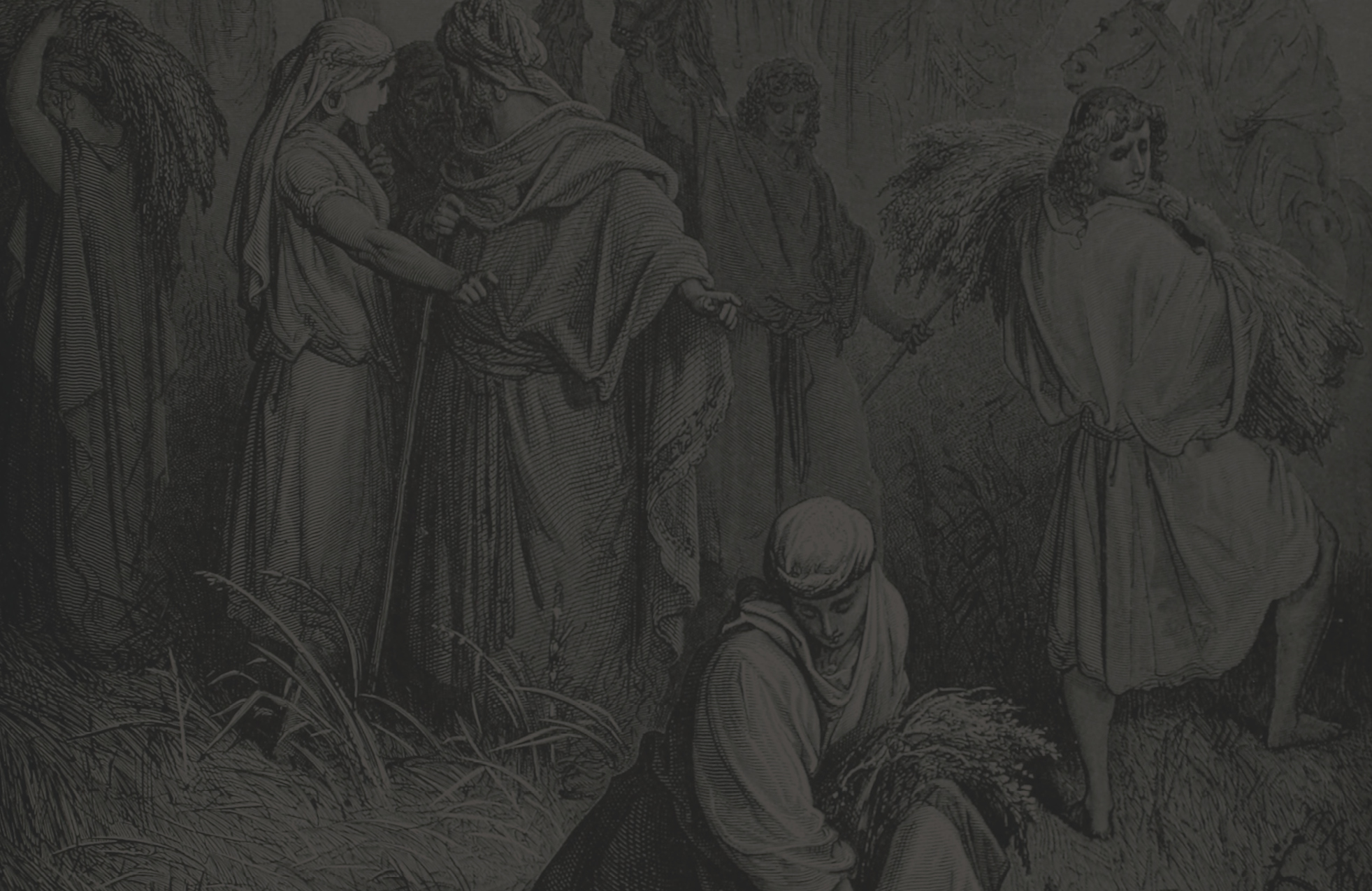
Sometimes, the most powerful way to inspire someone to change is by telling them a story.
This is the underlying idea behind Dr. Shelbi Cullen’s new book, “Steadfast in Every Season: Seeing God’s Faithfulness in the Lives of Women of the Bible.”
Cullen serves as an assistant professor of biblical counseling and women’s ministries at The Master’s University. Inspired by the call to faithful endurance in Hebrews 12, her book discusses the stories of faithful women in Scripture and draws out timeless applications.
We recently talked with Cullen about some of those applications and about her heart for strengthening women’s ministries through sound biblical teaching.
All Scripture is profitable, so we know that these stories are there to correct, teach, and train us in righteousness. God put them there — they’re inspired texts.
Even though these women lived in a different time and their cultural context is different than mine, we still all have difficult circumstances outside of us that we’re dealing with: family dynamics, relationship dynamics, and all manner of difficult things. And we can learn how to respond in a way that glorifies God; that’s what these women have taught me.
God is using these passages in our life to transform us from the inside out. So it’s much more than just a story.
You get to see a real person in a real time reacting to their circumstances. I chose to write about women who responded in a way I would want to respond if I were in that same situation. Take Ruth, for example: She was dragged away from her life context, having to move to a foreign land. A lot of people go through things like that.
So the story helps us see, “Wow, my situation is not unique. There are other people who have gone through something similar, and look at how she’s responding.”
One of the stories I’ve used most in counseling is the one of Martha and Mary. I think, primarily, Martha represents those of us who are very focused and task-oriented. She loves the Lord, but here we have a narrative where there’s a dinner going on and she’s losing it. I think all of us can relate to that. This would be the woman who’s anxious because things aren’t working out her way.
Then you’ve got Mary, who’s in that same circumstance with the same cultural expectations, but she’s choosing to sit at Jesus’s feet. What’s so beautiful about that is she’s actually taking on the role of a disciple. Luke’s trying to emphasize what a disciple of Christ looks like.
That’s what I try to encourage people with in counseling. We’re not saying that service is bad; obviously, serving somebody is a wonderful goal. But the attitude behind it is important. We ask, “How did you go from servant-hearted to anxious, from godly care to ungodly care?”
So I guide people through that. I let them read the text, and we talk through it, and we discuss how it applies to their specific situation. I know that God’s going to use His Word to draw people out — I don’t have to force it. If they’re really believers, the Holy Spirit will use the Word to convict their heart.
Mary Magdalene. I realized as I was studying her life that she’s not often taught biblically. People often say she’s a prostitute, but I wasn’t seeing any of that in the text.
All I see is a woman who is completely overwhelmed as an unbeliever with seven demons — an intense situation. I see Jesus loving her by releasing her from that. I see a woman who was saved and regenerated, and all of her fruit is amazing. She is following Jesus with other women, helping Him out of her means, and faithful to follow Him to the cross. She’s obviously a transformed person, and so she encouraged my socks off.
I think the biggest weakness is biblical literacy. My push is to show that the Word of God is sufficient for all things. God gives us His Word for life and godliness, and even in narrative form, He has something there to teach us and correct us. But you’ve got to approach it carefully and thoughtfully. You’ve got to know the Word before you minister the Word to a broader audience.
You know, I have two stickers on my iPad that my students see every time I teach. One says, “Biblical Sufficientist,” and the other says, “Go read your Bible, girl.” I want my students to see that every time.
I think, in the church, we’ve lost the conviction that God’s Word is sufficient. A lot of women’s ministries have a tendency to focus on events rather than Scripture and theology.
So when I teach Foundations of Women’s Ministry, I am talking about practical things, like how to lead a small group. But I’m also asking them things like, “Whose church is this, anyway?” This is Christ’s church, and I’m helping them develop a biblical framework for what they’re doing.
At TMU, we are committed to a literal, grammatical, historical hermeneutic. I want people to read the text, make observations, and study the context. I want them to be so familiar with the narrative that they can see the whole sweep of it, and I want their applications of a text to be well-grounded on sound observation and interpretation.
When I’m counseling people, that’s really what I’m modeling. When I give them homework, I want them to begin to interpret Scripture that way. I want them to move through observation and interpretation into application, and I want them to resolve to walk faithfully in light of that study.
So when I write, I’m naturally writing like that, because I know the importance of getting the full picture and being faithful to the Word of God. That’s my top concern.
Cullen’s book is available for purchase at 316publishing.com and on Amazon.
Master’s Connect is the alumni platform for graduates of LABC, TMC, and TMU. Meet other alumni, receive mentorship, view job listings, and more.


The Master’s University and Seminary admit students of any race, color, national and ethnic origin to all the rights, privileges, programs, and activities generally accorded or made available to students at the school. It does not discriminate on the basis of race, color, national and ethnic origin in the administration of its educational policies, admissions policies, scholarship and loan programs, and athletic and other school-administered programs.
© 2026 The Master’s University Privacy Policy Copyright Info


| Cookie | Duration | Description |
|---|---|---|
| cookielawinfo-checkbox-analytics | 11 months | This cookie is set by GDPR Cookie Consent plugin. The cookie is used to store the user consent for the cookies in the category "Analytics". |
| cookielawinfo-checkbox-functional | 11 months | The cookie is set by GDPR cookie consent to record the user consent for the cookies in the category "Functional". |
| cookielawinfo-checkbox-necessary | 11 months | This cookie is set by GDPR Cookie Consent plugin. The cookies is used to store the user consent for the cookies in the category "Necessary". |
| cookielawinfo-checkbox-others | 11 months | This cookie is set by GDPR Cookie Consent plugin. The cookie is used to store the user consent for the cookies in the category "Other. |
| cookielawinfo-checkbox-performance | 11 months | This cookie is set by GDPR Cookie Consent plugin. The cookie is used to store the user consent for the cookies in the category "Performance". |
| viewed_cookie_policy | 11 months | The cookie is set by the GDPR Cookie Consent plugin and is used to store whether or not user has consented to the use of cookies. It does not store any personal data. |