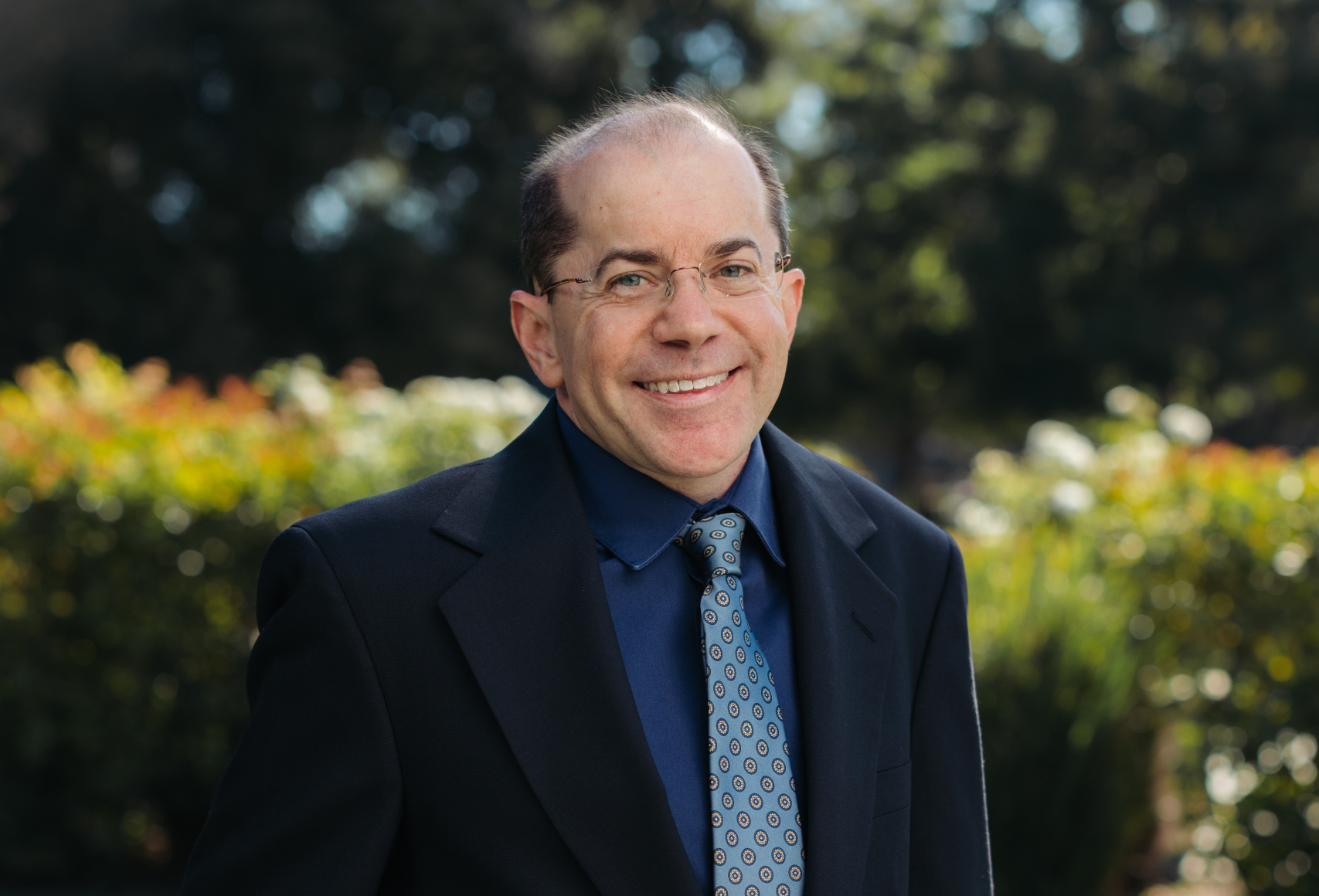
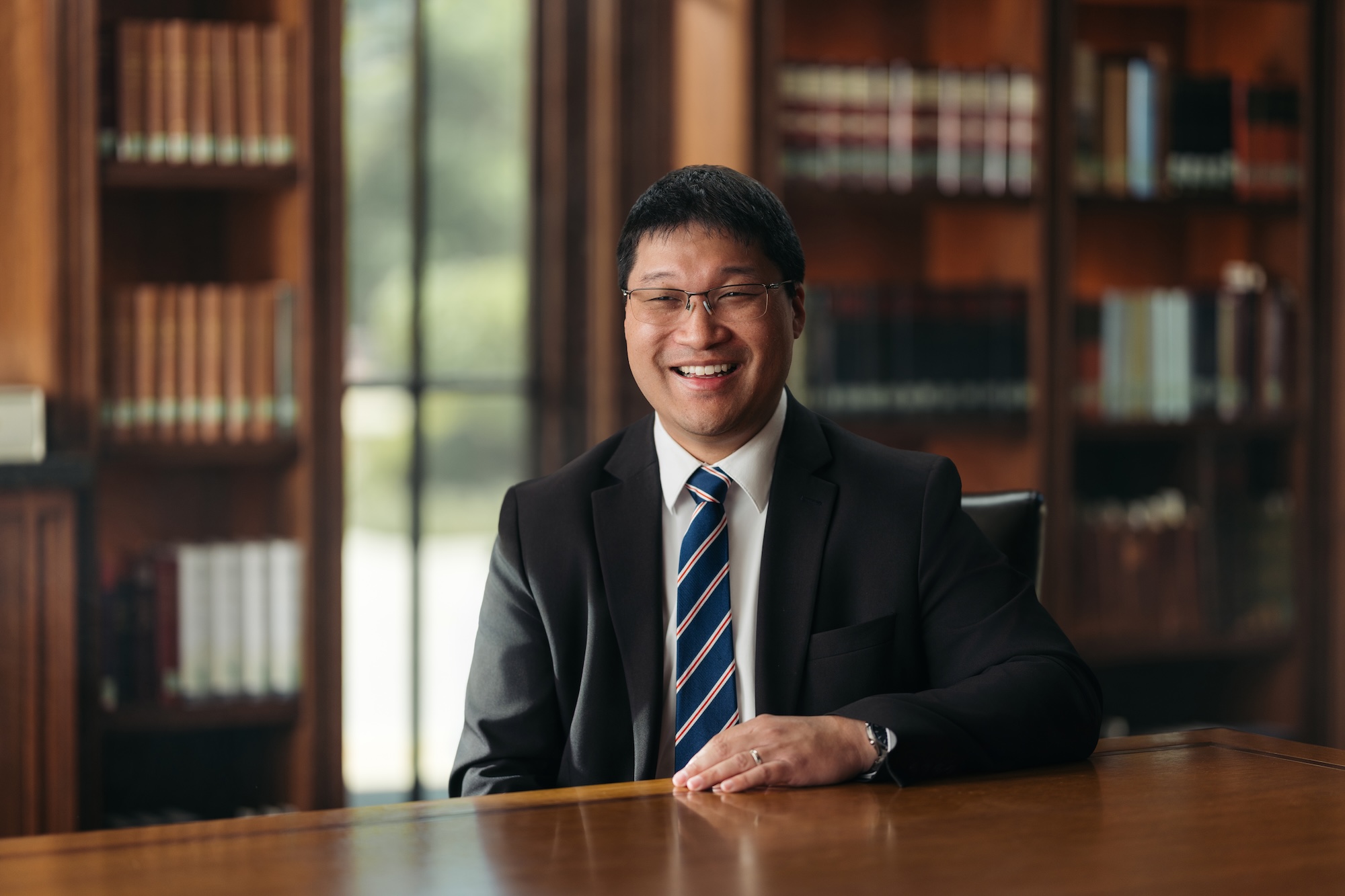
TMU President Dr. Abner Chou
Choosing a college is an important and complex decision. While there may be good reasons to attend any number of institutions, Dr. Abner Chou, president of The Master’s University, has written extensively on why he believes TMU offers exactly the sort of education most valuable to someone looking to prepare for a life of service to Christ — regardless of what they plan to do after graduation.
The below answers are taken from Chou’s articles on Christian higher education and what it looks like at TMU.
“Everything in life is theological. Everything must be taken under the lordship of Christ. And the decision about which university to attend is no exception, especially since nothing about it is remotely neutral.
“Universities as an institution and industry are not neutral. The very purpose of undergraduate education in our society is to inculcate a particular way of thinking. That is precisely why a student cannot attain certain types of jobs right after high school. Employers assume that a college education solidifies a student’s reasoning so that he or she can operate rightly in the workforce.
“Just as vocational schools train individuals to work with their hands, so undergraduate education trains the mind. So, by design, universities work to ingrain a pattern of thought in their students. That is why every school does not merely offer classes in one’s major but has general education requirements that shape how one writes, communicates, reasons and perceives society.
“Thus, universities are not neutral ground. They are purposed to push someone to a certain form of rationality.” – Dr. Abner Chou
“Sometimes we are confident that our young people will withstand the pressures of secular schooling. We may even prepare them to stand for their faith in the classroom.
“However, the influence of undergraduate education is not merely in the classroom. The sway of individual conversations that happen every day with faculty, staff and one’s fellow students is equally influential if not more powerful. In these interactions, subtle but profound shifts can occur.
“For example, someone might ask, ‘Well, do you really think this person can change? They don’t feel like they can.’ The moment one accepts this idea, a shift of truth occurs. Truth becomes what one feels as opposed to what the Scripture says. Reality is based upon experience and not upon the Bible. That simultaneously displaces the authority of Scripture. The Bible is now subject to our thinking rather than the other way around.
“Faith is not just crushed in the classroom but changed in a thousand micro-conversations that happen every day. At that point, students can still confess Christ, but their faith has definitions of truth, authority, Scripture and various points of theological doctrine that are entirely different from what the Scriptures say. At best, this leaves the student vulnerable to error, if not embedded in a false version of Christianity.”
“Dorms are not neutral. Headlines illustrate that this environment is far from benign. Drunkenness, partying, drugs and sexual immorality all pervade college housing. Confusion about gender issues will only make this worse in days to come.
“We can never underestimate the power of influence in these environments. Bad company corrupts good morals. We know the importance of holiness. It pleases God and is the way of life. Would we ever want to jeopardize that?
“The Scripture bemoans Lot’s time in Sodom and Gomorrah for it tormented his soul. Why would we ever put our young people there? Do we want to be a stumbling block to those in our care? This is not morally neutral.”
“True Christian higher education exists so that we do not have to make an either-or decision. It is not that a student will either have a bad education or face an environment hostile to his or her convictions. Rather, a student can have a good education in an environment that solidifies his or her convictions.
“This makes financial sense. Why invest so much resource into an education where a vast majority of it is contrary to what you have taught?
“This makes pragmatic sense. Why have a student waste time in curriculum more about an agenda and less about the actual subject matter?
“Most importantly, all of this makes theological sense. University, by design, is the place that completes the way an individual thinks. We want our young people to think the way the Bible thinks. We want them to think about the world, society, marriage, family, vocation, church and all of life the way God has revealed from beginning to end so that their lives now and forever are worthwhile for them and before God.”

“A specialized education is a great fit for specialized jobs, but those jobs are also a great fit to be automated. You can program a robot or computer to do technical work, and we already see it happening.
“A report from World Economic Forum projected that 5.1 million jobs could be lost over the next few years because of automation. Likewise, a study from Oxford found that 47% of jobs in the United States are at risk. A specialized education may get you a job quickly, but those jobs may also be ending (or changing) just as quickly.
“So, what do we do? Experts from Adobe to Bloomberg say it is simple. We need to be what computers are not: creative, good with people, and able to bring multiple disciplines together in determining a solution.
“The Christian liberal arts foster these skills. They train us to think through all of life and thereby approach problems comprehensively. Even more, they produce in us the character people want in the workforce. Christian liberal arts position us to be leaders in our vocations. They provide their own set of skills that specialized disciplines may not have, skills that make us resilient in a changing marketplace.”
“Life is more than just a job and requires far more than just a specialized education. In our families, we encounter issues of business and finance as we think through budgets, buying a home, cost of living, retirement, or investing. We think through philosophy and theology as we contemplate how to raise our children well. We certainly deal with science as we wrestle with technology, medicine, and health.
“Leading your family well demands that you be much more than just good at your job.
“The same goes for the church. People in the church have all the issues mentioned above and more. If we are to serve them, we need to understand how the lordship of Christ plays into every area of their lives.
“In an increasingly anti-Christian society, we need more than ever to properly discern all the ideas, laws, and movements coming our way. If we fail to do this, the church will just be tossed to and fro by every wind of doctrine and eventually will give up its calling to be the pillar and grounds of the truth.
“Your (future) family is at stake. The church is at stake. As you think about your education, these people are depending upon you to be prepared for them.”
“The purpose of a liberal arts education is to instill wisdom. It is about subjecting every category of thought — language, logic, science, math, history, and society — to the lordship of Christ. We are equipped to make the best choices in every area of life and lead a life that matters now and for eternity.
“Of course, this only occurs when the liberal arts are done rightly. The liberal arts, when subjected to Scripture, give us the best grasp on reality. They teach us to understand all of life correctly, the way God intended it to be.
“God has redeemed us and bestowed upon us the honor to participate in His work to ultimately glorify His Son in all things. We do not just want to be prepared for a job but for this all-consuming calling.
“Our decision about education matters, and we should choose one that makes us the most faithful before the Lord. Thus, the liberal arts are more important than ever. In a workplace that increasingly demands creative solutions, they give us an edge. In an increasingly anti-Christian society, they give us the discernment to stay true to Christ. In life with its many issues, they allow us to make the right decisions for ourselves, our families, and our churches.”

“If the classrooms, dorms, conversations and personal impacts of a university are not neutral, what makes us think the decision about where to send our children for school is neutral? Nothing about it is neutral.
“When we choose a school so that our child can attain prestige or a job, we are equally deciding that we want that institution to shape the way they think and live, ultimately setting a course for their life. This inherently is a theological decision, a discipleship decision, one that involves our God-given responsibility as parents and spiritual leaders, one for which we must give account before God, and thus one that demands our careful thought.
“Deuteronomy 6 reminds us that part of our love for God is instructing young people in God’s Word. From Israel’s foundation, God stated that a biblical education was crucial for the nation and a powerful demonstration of devotion to God. May we have the greatest urgency in giving our students a holistic education, from beginning to end.”
“University is the transition to adulthood. As such, it has massive ramifications upon the rest of one’s life.
“A person’s vocation, geographic location and lifestyle are determined in school. We could add on top of that: who they marry, their view on family, and their sense of parenting, each of which is developed in these years. Political philosophy and how one perceives society are also formed.
“There is a reason that society views college as the place where one’s thinking is completed. What happens in undergraduate education exerts tremendous weight on the rest of one’s life. A shipwrecked faith can destroy one’s life. Sins and mistakes in these four years can be baggage carried into one’s marriage, family, job and life. Furthermore, one may end up with a redefined Christianity, and that not only stays with someone in this life, but into eternity.
“The apostle John says his joy is watching his children walk in the truth. Few things are as painful as watching a life spent in a lie. The results of education are not just for this life but forever. This is anything but neutral.”
“Perhaps we need a different paradigm. My concern is far more pastoral than philosophical. It is about the truth and preventing a life of regret.
“Our culture has programmed us to be consumed with work and money, but that is not objective reality. Ecclesiastes reminds us of how people pursued riches only to reap vanity and strive after the wind. While the Bible acknowledges that work is a major component of life, it also reminds us that life is far more than this. Our lives also deal with our families, church, government, and society.
“Most importantly, our lives will extend far beyond the here and now into eternity, and we will need to give an account to God for all we have done, not just relative to our jobs.
“When all we think about is jobs and income, we are not being practical and realistic. We are being extremely short-sighted and dangerously so. ‘For what is a man profited if he gains the whole world, and loses or forfeits himself?’
“You can make all the money in the world and still fail at life. We don’t just want a nice job for ourselves or for our children. We don’t just want to gain the world and lose our soul. We want to live a life in its entirety for Christ. That’s the richest life, the real paradigm.”

“An absolute commitment to Christ and Scripture is more than just having a doctrinal statement. It is more than appealing to one’s Christian heritage or tradition. It is more than having a denominational affiliation. It is certainly more than being Christian in name. And it is even more than having chapel multiple times a week or having Christians on campus.
“Those are all good things, but an absolute commitment is something far deeper and broader than that.
“One way to think about an absolute commitment to Christ and Scripture is through the phrase ‘Christ in all things.’ There is a reason that the phrase is not ‘Christ and all things,’ or even ‘all things in Christ.’ Instead, ‘Christ in all things’ emphasizes that Christ is not only lord over some things but everything. And within that, it emphasizes that every single assertion within any given subject or discipline must be taken captive to the lordship of Christ.”
“Sometimes, schools will teach about Christ as one subject of many. Bible and theology are taught alongside of math, history, politics, music, science, and economics. However, that is not Christ ‘in’ all things; that is Christ ‘and’ all things.
“At that point, Christ and Scripture is just one idea among many, and one’s commitment to Christ and Scripture is no different than his commitment to everything else.
“In other cases, schools will say that every subject provides insight into Christ. That initially sounds well and good. But what people mean by this is that whatever someone observes in a discipline dictates who Christ is and what He is about. That approach creates Christ in one’s own likeness or desire. Whatever one thinks, from science to Shakespeare, becomes the definition of Christ.
“With that mentality, Christ and Scripture are not defining people’s disciplines, but people’s disciplines are defining Christ and Scripture. While this idea may sound noble at first, it is far from an absolute commitment to Christ and Scripture. In fact, it is an absolute commitment to everything over Christ and Scripture.”
“Faculty, staff, and students all must possess this conviction as they genuinely affirm an extensive doctrinal statement. Consistently, that demands a very careful hiring and enrollment process.
“’All things’ must include not only people, but all that they do. Professors in what they teach, how they teach it, how they shepherd and disciple students, the standards they have, how they view the educational enterprise, and what and how they research are all directed by and for the lordship of Christ.
“Similarly, dorm life, student life, and co-curricular activities like athletics and theater must be rigorously conformed to Christ in every component. The way one counsels and the principles that drive campus life must be determined by Christ and Scripture. On top of this, the way operations occur, from accounting to IT to financial aid to events, must all be done according to Christ.
“Christ in ‘all things’ demands that one takes everything on a Christian university campus, puts it under the microscope, and sees how Scripture determines every single thing be defined and done as an act of worship to Christ.”